Quick Start's QuikCool Alternator Cooling System
Heat will Destroy Your Alternator...
Excess heat is the leading killer of automotive alternators, burning up Bearings, Bridge Rectifiers, Stators and Voltage Regulators. The process of power generation produces heat and the greater demand you place on your alternator increases the heat generated. These higher temperatures decrease the efficiency of all conductors and shortens the life of your alternator or other electonic components. Diodes in the Bridge Rectifier start to fail, the Stator starts to burn up robbing your electrical system of power and puts a tremendous strain on all of the components inside the alternator. Vehicles are not designed to provide proper ventilation to your high output alternator especially when they are sitting still. This results in a burned out alternator, and always at a bad time.
This Product Can Help If
- Your vehicle sits at idle with little airflow to the alternator, such as on:
- Police Vehicles
- Emergency Vehicles such as Fire & Ambulance
- Utility Vehicles for Power & Gas
- Your alternator is under higher demand, as with Stereo Equipment .
- You have added Batteries, Lights, Power Inverters, Stereo Systems, CB or Short Wave and other electrical equipment.
- Anytime you put your alternator under higher demand it will overheat and eventually fail , you need this product to help extend the life of your alternator.
Introducing Quick Start's QuikCool Alternator Cooling System
Ventilation is the key. Our unique system provides fresh, cool air to your alternator, accelerated by our powerful high volume fan. The High volume of cooler air helps push the heat out to cool down your alternator, increasing the efficiency, which means more power and longer life from your alternator.
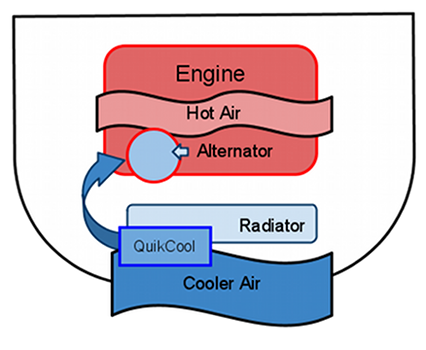
How the Quikcool Alternator Cooling System works
The function is to intake and blow cool air on your alternator to help remove heat. The blower box with it's high volume turbo cooling fan is mounted on your vehicle, outside of the engine compartment, in cooler air. One of the best spots is in front of the forward firewall just behind the front bumper or grill area. From there you run the 2" black tube from the blower unit to the rear of the vehicles alternator. You want to try to keep this blower tube as short as possible, the shorter the tube the more air volume you will get, for better alternator cooling. This cooling device will help keep your alternator from burning up. We guarantee you will take some of the heat out of your alternator with this innovative device.
Don't let heat kill your alternator, kill the heat first!
Click Here for QuikCool Alternator Cooling System Easy Installation Instructions
Order the QuikCool System Today!
Features:
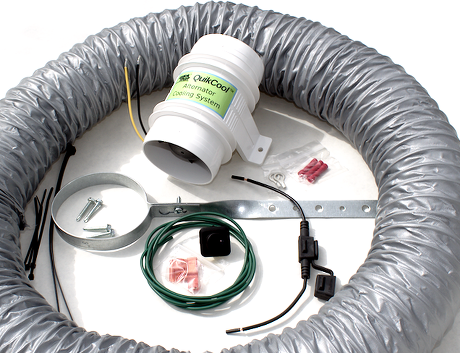
- High Volume Inline Turbo Fan for Cooling.
- Illuminated Control Switch
- 5' of 3" OD Gasoline, Oil & Abrasion resistant fiber-glass ducting
- Small parts & mounting hardware
- Universal hose mounting bracket